Hair changes are a signal, not a flaw.
A clinician-led approach to understanding the four reasons hair sheds, thins, or stops growing - and the program built to address each one.
.webp)

Most people notice their hair before they understand what it's telling them.
If you've found yourself studying your part in the mirror, pulling a heavier-thanusual amount of hair from a brush, or wondering when the volume at your crown began to soften - you are not alone, and you are not imagining it.
Hair is one of the most honest signals the body sends. It quietly reflects what's happening underneath: stress, hormones, nutrient stores, inflammation, the slow influence of genetics. Long before bloodwork shifts or symptoms become loud, hair is often the first thing to whisper that something is changing.
The right care begins with the right question: not how do we fix this, but what is this telling us?
The Kairos Scalp Health Program was built around that question - and around the four pathways we most often see hair travel.
Hair changes for reasons. Four of them, most often.
Each one has its own story, its own timing, and its own thoughtful path forward. Tap any pathway to explore it.
The Recovery Pathway
For hair that has lost its rhythm after a significant life shift — and is ready to find its way back.

THIS PATHWAY MAY BE FOR YOU IF
- You've noticed a sudden, heavier shed in the past few months
- You went through a major stress, illness, surgery, or hospital stay
- You're postpartum, or recently weaned
- You've lost significant weight quickly-through dieting, illness, or weightloss medication
- our hair was healthy before this began
WHAT'S LIKELY HAPPENING
Your body experienced a significant event and shifted a larger-than-usual percentage of its hair follicles into a resting phase. A few months later, that hair releases. The follicles themselves are typically healthy - they simply need support, nutrient repletion, and time to return to their normal cycle.
WHAT CARE MAY LOOK LIKE
A combination of in-clinic regenerative therapies, targeted at-home treatment, and a tailored plan to support the body through recovery. The goal is to give the follicles everything they need to wake fully and return to growing strong, dense hair.
The Hormonal Pathway
For hair that is responding to a shift in the body's internal chemistry — quietly, gradually, and often confusingly.
THIS PATHWAY MAY BE FOR YOU IF
- You're in your late 30s, 40s, or 50s and your hair has gradually thinned
- You suspect perimenopause or menopause is part of the picture
- You have a known thyroid condition or "borderline" labs
- You have PCOS or irregular cycles
- Your hair has become finer or less dense without a clear triggering event
WHAT'S LIKELY HAPPENING
Shifts in hormones can shorten the hair's growth phase, miniaturize folliclesover time, or change scalp oil and inflammation in ways that affect density. Because the cause is internal, a treatment plan that only addresses the scalpwill only do so much. Lab work often plays a meaningful role.
WHAT CARE MAY LOOK LIKE
A thoughtful workup that may include hormone and thyroid evaluation, pairedwith in-clinic regenerative scalp therapies, topical and oral support, andwhen appropriate - conversations about the wider hormonal picture throughour longevity medicine program.
The Genetic Pathway
For hair patterns that run in the family - where the goal becomes preservation, density, and time.
THIS PATHWAY MAY BE FOR YOU IF
- You have a family history of pattern hair loss in one or both parents
- Your hairline, temples, or crown have changed over years rather than months
- You first noticed thinning in your 20s, 30s, or 40s
- You're a man or woman with a familiar pattern of thinning
- You're on testosterone replacement therapy and have noticed thinning
WHAT'S LIKELY HAPPENING
Genetically susceptible follicles are gradually miniaturizing, producing finer,shorter hairs over time. The pattern is not a sign of poor health - it is a sign ofinheritance. What matters most is consistency: the earlier and more steadily this is supported, the better follicles can be preserved.
WHAT CARE MAY LOOK LIKE
A long-game plan built on layered support: in-clinic regenerative therapies,topical and oral medical support tailored to the patient, and an honestconversation about the realistic arc of treatment. This pathway rewardspatience and partnership.
The Inflammatory Pathway
For hair affected by what's happening at the scalp itself— where calming the environment is the first step toward growth.
THIS PATHWAY MAY BE FOR YOU IF
- Your scalp is itchy, flaky, oily, or persistently irritated
- You have seborrheic dermatitis, psoriasis, or another scalp condition
- You've worn tight hairstyles, extensions, or weaves consistently
- You have an autoimmune condition or have noticed patchy hair loss
- The scalp itself feels different- tender, sensitive, or reactive
WHAT'S LIKELY HAPPENING
The scalp environment- inflammation, the skin's microbiome, mechanicaltension - is interfering with normal follicle function. Until that environment isaddressed, even excellent regenerative therapies have less to work with.
WHAT CARE MAY LOOK LIKE
A scalp-first plan that begins with calming the surface - medical-grade scalptherapies, targeted prescription support where appropriate, and a careful lookat what may be triggering the inflammation. Once the scalp is restored,regenerative therapies can do their full work.
A clinician-led guide to understanding your hair.
Take it with you. Share it with someone who needs it. Our complete Pathway Guide - the four pathways, the philosophy, and what care canan look like - in one beautifully designed PDF.
A guide is a beginning.
The consult is the answer.
If you've recognized yourself in one of these pathways - or in more than one - that's exactly the point. Most hair stories don't fit cleanly into a single column.
An honest conversation
We begin where you are. Your history, your goals, what you've already tried, what's changed, and what you're hoping for from this season forward.
A thoughtful assessment
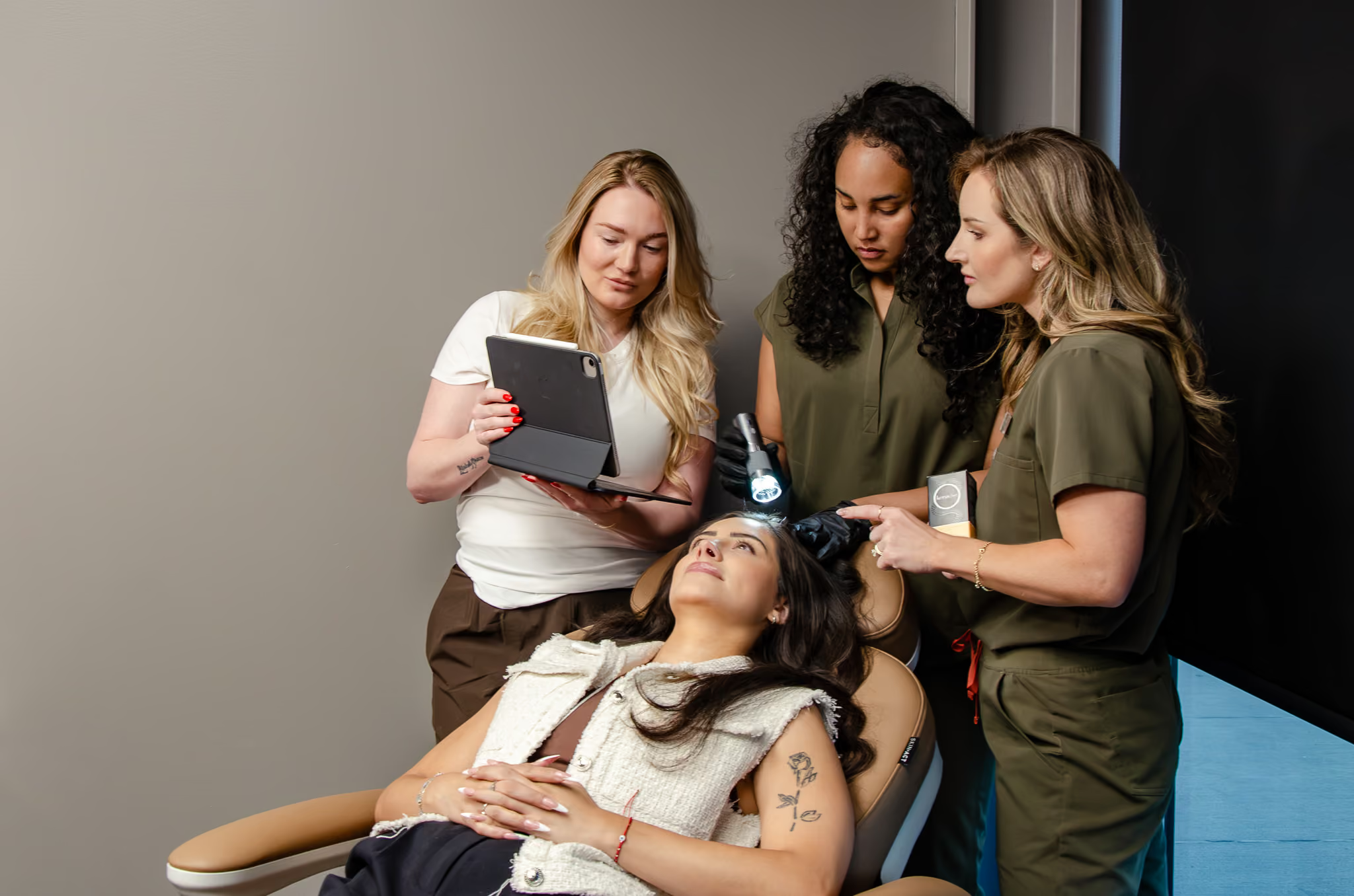
A clinical look at the scalp and hair, paired with the right questions and, when needed, lab work to understand what's happening beneath the surface.
Your pathway, defined
A clear explanation of which pathway your hair is on - and why - in language that makes sense and gives you back a sense of agency.
A plan you walk together
A three-to-four-month program tailored to your pathway, followed by a maintenance plan designed to protect your progress for the long term.